Here’s a fun and simple Nature Scavenger Hunt you can use with kids. It’s easy to follow and works for backyards, parks, or even a walk around the neighborhood.
🌿 Easy Nature Scavenger Hunt for Kids
Find and check off these items:
🍁 A leaf bigger than your hand
🌸 A flower (any color!)
🐦 A bird flying or sitting
🐛 A bug crawling or buzzing
🌳 A tree with rough bark
🍂 A crunchy leaf on the ground
🪨 A smooth rock
🪵 A stick shaped like the letter “Y”
☁️ A cloud shaped like an animal
🐾 Animal tracks or signs of an animal (feathers, acorn shells, etc.)
📝 How to Play
Give each child a printed list or let them use it on a clipboard.
Set a time limit (20–30 minutes).
Encourage them to draw or take a picture of what they find.
For younger kids: let them collect safe items (like leaves, rocks, or sticks).
For older kids: turn it into a photo scavenger hunt using a phone or camera.
A new school year is more than just fresh pencils, sneakers, and a bigger backpack—it’s a fresh start. And what better way to inspire your child’s goals and dreams than by helping them create their very own vision board?
A vision board is a fun, hands-on project that allows kids to picture what they want to achieve—both in the classroom and on the field or court. For the 2025–2026 school year, it can be a creative tool to help your child set intentions, stay motivated, and visualize success in school and sports.
Why Vision Boards Work for Kids
Vision boards take big ideas and make them visible every day. When kids see their goals—whether it’s getting an “A” in math, improving their free throw percentage, or making new friends—they’re reminded of what they’re working toward. It turns abstract ideas into something real and exciting.
Supplies You’ll Need
Poster board, corkboard, or a large piece of cardboard
Magazines, old sports programs, and printed images from the internet
Scissors and glue sticks
Washi tape, stickers, and colorful markers
Photos of your child in sports gear or at school
Inspirational quotes or words (printed or handwritten)
Step-by-Step Guide
1. Talk About Their Goals
Start with a conversation:
What subjects do they want to improve in?
Is there a sport they want to get better at?
Do they want to try a new extracurricular activity? Let them dream big, but also think about small, achievable steps.
2. Gather Inspiring Images
Flip through magazines for photos of athletes, books, sports equipment, and anything that feels exciting. Print pictures of their favorite sports heroes or school supplies they love.
3. Make It Personal
Add photos of your child doing what they love—reading, playing basketball, drawing, or practicing soccer. Include their jersey number, team logo, or mascot for sports motivation.
4. Arrange & Design
Let your child decide how to lay everything out—sports goals on one side, school goals on the other, or a blended collage. Use washi tape and stickers to make it colorful and eye-catching.
5. Add Positive Words
Phrases like “I can do it”, “Team player”, “Stay curious”, or “Work hard, dream big” can serve as daily encouragement.
6. Display It
Hang the vision board in their bedroom or homework space where they’ll see it often. That way, their goals will be front and center all year long.
Ideas for Back-to-School & Sports Goals
Reading 20 minutes a day
Making honor roll
Learning multiplication tables
Trying a new sport or position
Scoring their first goal
Making more passes in a game
Attending all practices
Being a supportive teammate
The Lasting Impact
A kids’ vision board isn’t just a craft project—it’s a confidence-building tool. It teaches children that their dreams are valid, that effort matters, and that they can take steps toward what they want. Plus, it’s a great bonding activity to kick off the school year with positive energy.
Here’s to a successful, fun, and goal-filled 2025–2026 school year—both in the classroom and in sports!
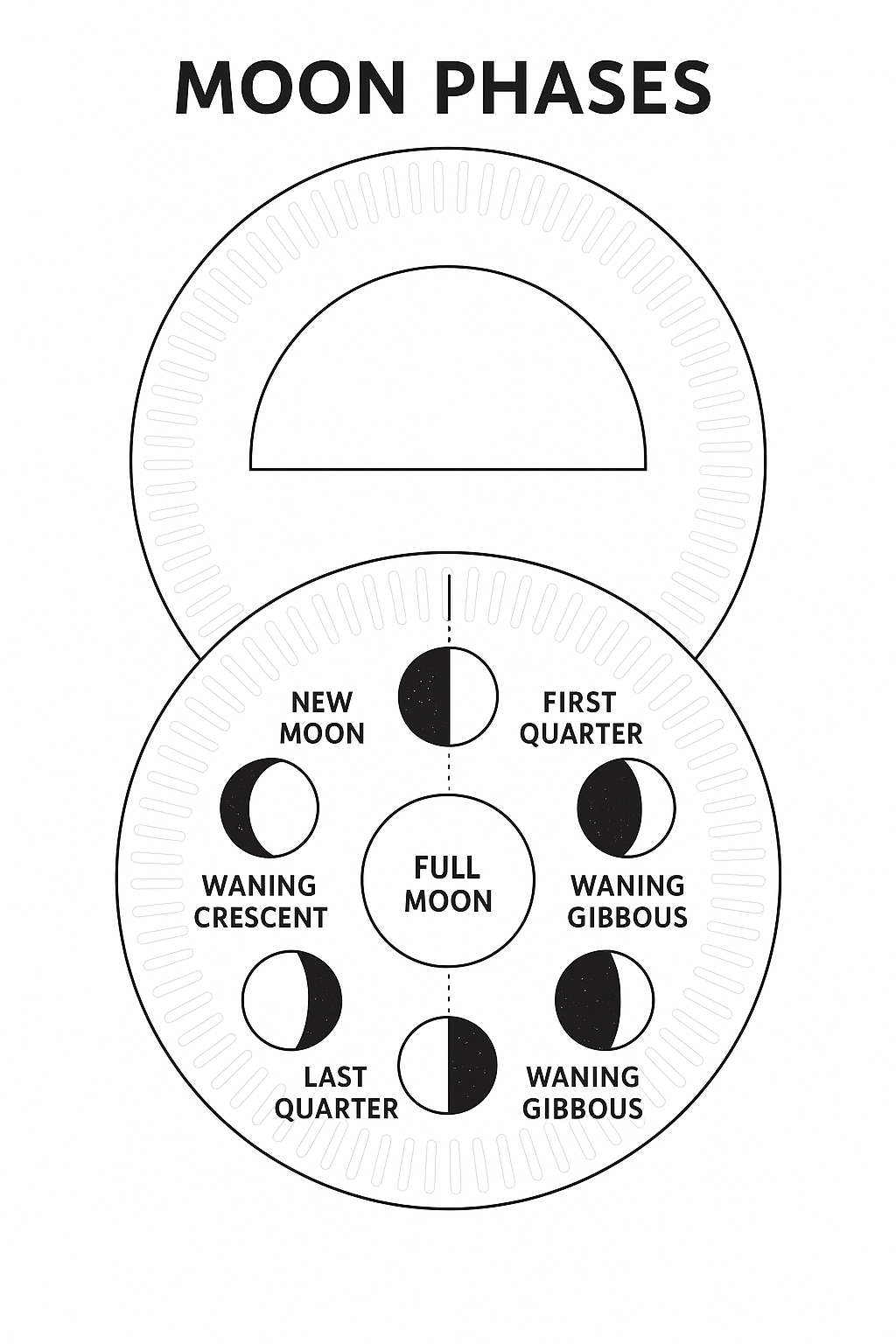
Here’s a simple, hands-on kids craft for teaching moon cycles — easy to make with household items and fun for little ones to play with after. We have been on a big moon kick at our house! Hope you enjoy this as much as we have.
Moon Phases Paper Plate Craft
Ages: 4+ (with help for cutting) Time: About 20 minutes Mess Level: Low
Materials
2 white paper plates
Black construction paper (or you can color with a black crayon/marker)
Scissors
Glue stick or tape
Yellow crayon or paint (optional)
Marker (for labeling phases)
Brass fastener (paper brad)
Instructions
Prepare the Moon Plate
On the first paper plate, draw and color a full moon in the center (you can make it yellow, or keep it white).
This plate will be your “moon view.”
Make the Viewing Plate
Take the second paper plate and cut out a wide window (about 1/3 of the plate) — this will reveal the moon phases underneath.
Color the rest of this plate black to represent the night sky.
Layer & Attach
Place the “moon plate” underneath the “viewing plate.”
Attach them in the center with a brass fastener so the top plate can spin.
Add the Moon Phases
On the moon plate, lightly pencil in where each phase will show through the window as you rotate.
Color in the phases:
New Moon (all black)
Waxing Crescent (thin white slice on the right)
First Quarter (right half white)
Waxing Gibbous (mostly white, left sliver black)
Full Moon (all white)
Waning Gibbous (mostly white, right sliver black)
Last Quarter (left half white)
Waning Crescent (thin white slice on the left)
Label the Phases
Around the edge of the top plate, write the names of each moon phase so kids can match them as they turn the plate.
Extra Fun Ideas
Add glow-in-the-dark paint for nighttime learning.
Use glitter for the stars around the moon.
Make a mini booklet with facts about each phase to go with the craft.
Here’s a delightful list of children’s books about the Moon—perfect for story time, bedtime, or teaching lunar concepts in a fun and gentle way:
Recommended Children’s Books about the Moon
Fiction & Bedtime Favorites
“Kitten’s First Full Moon” by Kevin Henkes A sweet Caldecott Medal–winning tale of a kitten mistaking the full moon for a bowl of milk.
“A Big Mooncake for Little Star” by Grace Lin A charming Caldecott Honor book where a girl named Little Star nibble at a “mooncake”—an imaginative reflection of moon phases.
“Papa, Please Get the Moon for Me” by Eric Carle A playful story about a dad retrieving the moon for his child—teaching about waxing and waning through collage illustrations.
“I Took the Moon for a Walk” by Carolyn Curtis, illustrated by Alison Jay A lyrical, rhyming tale about a walk with the moon, perfect for soothing bedtime reading.
“Mooncake” by Frank Asch A bedtime tale featuring Bear who mistakes snow for the moon—sweet and whimsical.
“The Moon Child” by Nadia Krilanovich A dreamy, gentle story of woodland animals playing with the moon, ideal for winding down.
“Owl Moon” by Jane Yolen A serene, Caldecott-winning tale of a nighttime owl outing with powerful lunar imagery.
“Many Moons” by Remi Courgeon A beautifully illustrated blend of fiction and moon-phase education, with imaginative descriptions like a cat’s tail crescent.
“Rabbit and the Moon” by Douglas Wood A folktale adaptation of a Cree legend, explaining how rabbit reached the moon. Soothing watercolor illustrations.
Playful & Educational Nonfiction
“Moon! Earth’s Best Friend” by Stacy McAnulty Narrated by the Moon itself—this fun and fact-filled portrayal is great for young children.
“The Moon Seems to Change” by Franklyn M. Branley A more instructional take on lunar phases—great for slightly older kids ready for straightforward learning.
“Moonshot: The Flight of Apollo 11” by Brian Floca Gorgeous illustrations depict the awe and excitement of the first Moon landing—great for curious explorers.
“Moon: A Peek-Through Board Book” by Britta Teckentrup A tactile board book with cut-outs showing lunar phases—perfect for hands-on interaction.
“A Moon of My Own” by Jennifer Rustgi Follows a girl’s journey travelling the world with the moon—mixes geography and starry storytelling.
“Moon Pops” by Heena Baek A culturally-inspired Korean tale where the moon melts—inspiring and visually delightful.
“The Moon Tonight: Our Moon’s Journey Around Earth” by Jung Chang-hoon A gentle nonfiction story celebrating the lunar cycle, with parent-child scenes and supplemental educator resources.
“Go for the Moon: A Rocket, a Boy, and the First Moon Landing” by Chris Gall A fun adventure capturing Apollo 11 through a child’s imaginative lens.







 Made by Kids